
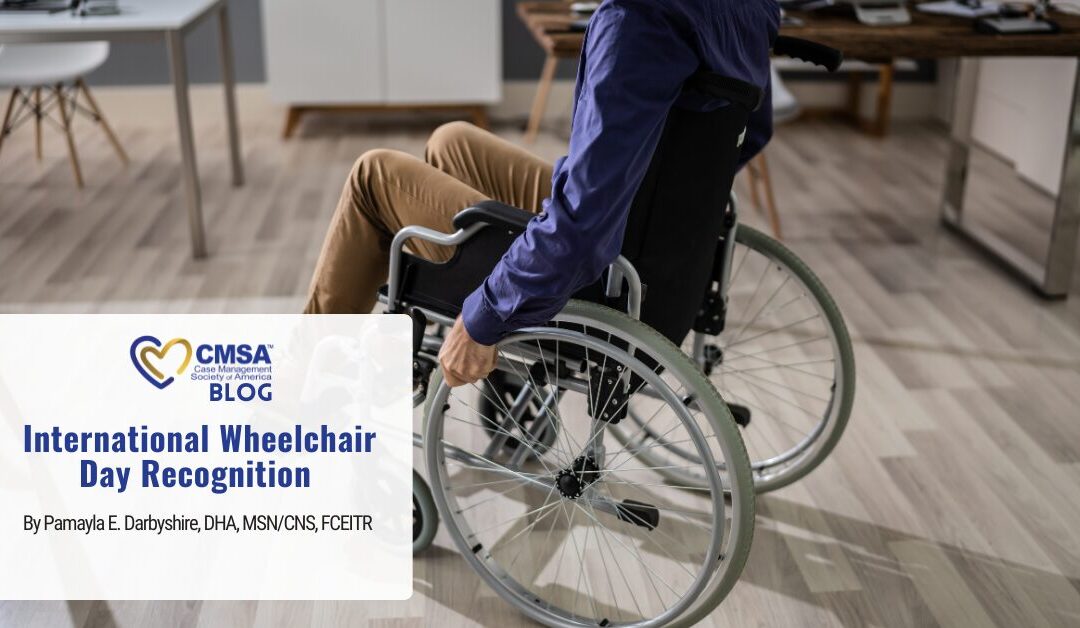
By Pamayla E. Darbyshire, DHA, MSN/CNS, FCEITR
Where It All Started
International Wheelchair Day, observed each year in March, was founded in 2008 by Steve Wilkinson, a passionate advocate for wheelchair users. His vision was to spark a global movement—one that celebrates the positive impact of wheelchairs, recognizes those who support mobility solutions, and raises awareness of the millions of people worldwide who still lack access to appropriate equipment.
While the day itself has passed, its purpose continues year-round. It serves as an important reminder of the ongoing need to advance accessibility, equity, and independence for individuals who rely on mobility devices.
The International Society of Wheelchair Professionals (ISWP) remains committed to carrying this mission forward beyond a single day. Through education, advocacy, and collaboration, ISWP works to ensure that accessibility, inclusion, and mobility remain global priorities. The organization encourages continued recognition of wheelchair users’ achievements, support for those who provide access, and awareness of the ongoing global need for appropriate wheelchairs.
Carrying the Momentum Forward: The 2026 Theme
The 2026 theme, #Unstoppable, continues to resonate well beyond March. It highlights the resilience, strength, and independence of wheelchair users worldwide and underscores the transformative power of mobility.
This theme invites ongoing reflection and action in key areas:
- Accessible Mobility: Continued advocacy for removing physical, social, and attitudinal barriers to build truly inclusive communities.
- Access to Technology: Reinforcing that properly fitted, personalized wheelchairs are essential tools for independence—not luxuries—and that mobility devices enable freedom, connection, and participation.
Even after International Wheelchair Day, these priorities remain critical as communities, healthcare professionals, and organizations work to create more equitable systems of care and access.
Pursuit of Happiness: Habits That May Bring Joy
A healthy, engaged mind contributes to overall well-being. Resources like AARP’s Staying Smart Pursuit of Happiness Challenge (2026) highlight simple, research-backed habits that may help increase joy—an important consideration for individuals navigating health challenges or life transitions.
Expanding Access Through Innovation
Advancements in mobility technology continue to shape what accessibility looks like in everyday life. For example, American Airlines and its subsidiary Envoy Air have partnered with WHILL to introduce autonomous wheelchair options at select major airports, including Miami International Airport and Los Angeles International Airport.
These services—also available at international locations such as Winnipeg Richardson International Airport, Haneda Airport, Narita International Airport, and Kansai International Airport—demonstrate how innovation can enhance independence and ease of travel.
Travelers can request wheelchair assistance in advance or on the day of travel, with trained staff available to provide guidance. These autonomous devices use sensors and navigation technology to move safely and efficiently through busy airport environments, offering an additional layer of support for those who need it.
As of 2026, the growing adoption of these technologies reflects a broader shift toward more inclusive infrastructure worldwide.
Resources
AARP (Ameridcan Association of Retired People). (2026). https://www.aarp.org/
Burrola-Mendez, Y., Rushton, P. W., Plummer, T., Rusaw, D. F., Vajaratkar, V., Datta, T., Mnyanyi, C., Múnera, S., & Goldberg, M. (2025). Towards capacity building in wheelchair service: A participatory action research approach to develop an international package for wheelchair service education. Journal of Participatory Research Methods, 6(2), 168–191. https://doi.org/10.35844/001c.129837
Charlton, K., Murray, C., Layton, N., & Attrill, S. (2025). The experience of annual wheelchair training for people with chronic and progressive conditions: Perspectives of users and trainers. Health Expectations, 28(4), e70342. https://doi.org/10.1111/hex.70342
Nunez, P. (2025). Self-advocacy and access: Goals for case managers and disability mangers.Professional Case Management, 30(5), 224-226.
https://doi.org/10.1097/NCM.0000000000000821
BIO: Pamayla E. Darbyshire earned her Doctorate in Health Administration from the University of Phoenix, AZ. She has a master's degree in nursing with a clinical nurse specialist, focused on education, and over 45 years of nursing experience. Dr. Darbyshire is a long-time member of Sigma Theta Tau International Honour Society of Nursing. In addition, Dr. Darbyshire is a member of the Association of periOperative Registered Nurses (AORN) National Research Committee, engaged in grant approvals, Expo Poster Abstract reviews, AORN guideline updates, and has co-authored for The AORN Journal, Phoenix Scholar, The Qualitative Report and other peer-reviewed journals. She is a Case Management Society of America (CSMA) member. Dr. Darbyshire's commitment to the academic community is evident in her role as a mentor for doctoral students (UoPx), and the American Nurses Association (ANA). Her research interests include case management, chronic disease, neurodiversity, and the application of artificial intelligence in higher education. She has presented at numerous virtual conferences with an international audience.
Department/Affiliation: College of Doctoral Studies, University of Phoenix, AZ, USA; CEITR fellow; post-doctoral researcher/author
Level up your skills with CMSA’s Case Management Boot Camp!
Are you a case manager with 5 years of experience or less? We’re filling the gap in orientation and training with an immersive, in-person bootcamp designed to boost your confidence and professional expertise.
Gain 19.5 CE credits while networking with peers and learning from industry experts. Space is limited, don't miss out!
-September 23–25, 2026
-Brentwood, TN
-Register by September 1st: cmsa.org/event/case-management-boot-camp/