
By Jenny Quigley-Stickney MSN, BSN, RN, CCM, ACM-RN, CMAC, CPHM, FCM
November’s National Diabetes Month reminds us that every conversation about prevention, every connection to care, and every barrier we help remove can make a difference. As professional case managers, we have an opportunity to turn awareness into meaningful action for the individuals, families, and communities we serve.
The scope of the challenge is substantial. According to the Centers for Disease Control and Prevention, an estimated 115.2 million American adults have prediabetes, and approximately eight in ten do not know they have it. These numbers represent people who may benefit from earlier recognition, education, and support.
As CMSA President and a daughter of two parents both struggling with late onset Type 2 diabetes, I encourage our members to consider how we can make diabetes prevention and management part of our everyday practice. We can encourage individuals to discuss their risk and appropriate screening with their healthcare professionals, help them understand their care plans, and connect them with education and community resources. Our work begins with listening: What matters most to this person? What challenges make managing their health difficult? What support would make the next step possible?
Education must be paired with access. Encouraging healthier eating has limited value when a family cannot afford nutritious food. A referral may lead nowhere when transportation is unavailable. A medication plan requires further attention when its cost competes with rent or utilities. Case managers can help identify these social determinants of health and coordinate assistance for both food insecurity and transport, and develop realistic plans that reflect each person’s circumstances, preferences, and goals.
For individuals living with diabetes, our commitment extends to ongoing, coordinated care. The National Institute of Diabetes and Digestive and Kidney Diseases emphasizes taking action to prevent diabetes-related health problems. Its National Diabetes Month resources highlight knowing one’s risk, managing diabetes, and maintaining regular healthcare visits. These messages reinforce the importance of helping people remain connected to their care teams.
Our efforts also align with Healthy People 2030’s Leading Health Indicator D-01: reducing the number of diabetes cases diagnosed yearly. This national objective gives us a shared prevention goal. In our own organizations and communities, we can support that goal by strengthening referral pathways, promoting accessible education, and following up to determine whether individuals received the services they needed.
This November, I invite CMSA members and chapters to share trusted information through patient conversations, professional networks, community partnerships, and chapter communications. The NIDDK National Diabetes Month resources and Joslin clinic https://joslin.org offer useful outreach materials. Healthineers’s diabetes resources provide consumer-friendly information about preventing type 2 diabetes, healthy eating, physical activity, and questions to ask a healthcare professional.
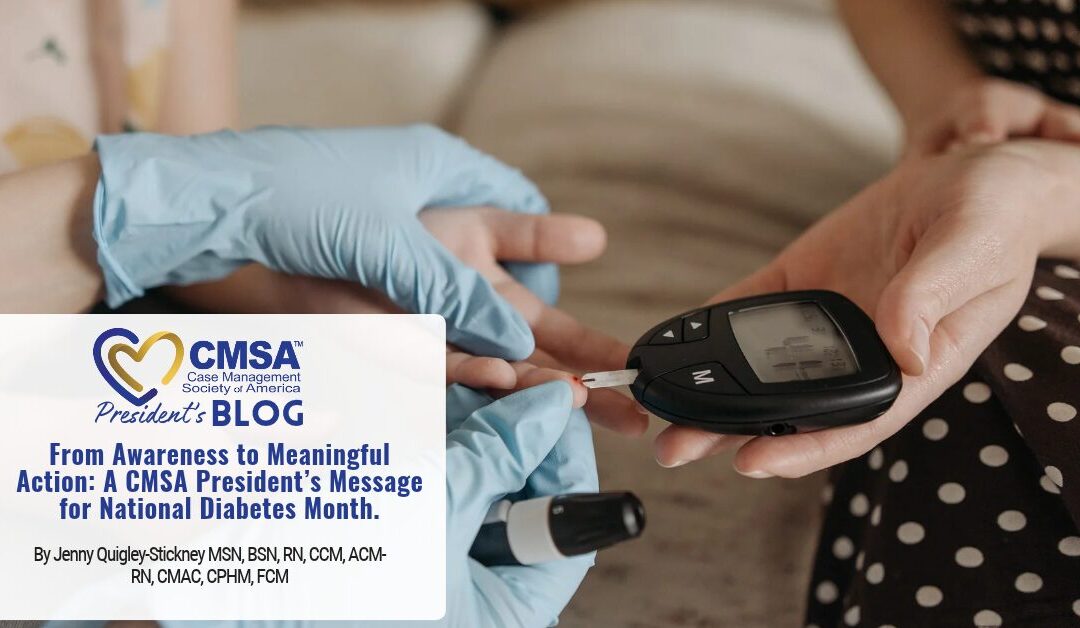
Let us approach these conversations with compassion and without blame. Help introduce new technology into your patients' lives to help them more closely monitor blood sugar levels daily to three times without using blood tests. These new systems can allow patients the ability to modify eating habits in real time achieving greater success with blood sugar reduction. Add gentle exercise routines that are age appropriate for the patients and family members we work with to lower A1C levels. People deserve understandable information, achievable goals, and support that respects the realities of their lives. Our leadership is reflected in how well we help individuals feel heard, informed, and able to participate in their care.
National Diabetes Month is an invitation to renew that commitment. Together, we can bring prevention into everyday conversations, strengthen connections to care, and help turn greater awareness into healthier futures.
Applications Are Now Open for the Case Management Fellow Program! Are you ready to take your impact on the case management profession to the next level?
CMSA’s Case Management Fellow Program recognizes accomplished professionals who are committed to advancing standards of practice, shaping the future of case management, and inspiring the next generation of leaders.
As a Fellow, you join a distinguished community of thought leaders, mentors, authors, speakers, and advocates who share a passion for advancing the profession.
 Apply by February 15, 2027
Take the next step in your professional journey and make your mark on the future of case management.
Visit here for more information: https://bit.ly/48zwEAX
Bio: Jenny has been active with CMSA/CMSNE for over 25 years serving currently as CMSA President 2026-2028 and prior to this role, served as CMSA Treasurer, Board of Director for CMSA from 2021-2023. Worked as CMSA National she served as the President of CMSNE & Chair for both CMSA and CMSNE Public Policy Committees. Jenny is active in the CMSNE New England states serving as co-chair for Public Policy promoting the advancement of the Nurse Licensure Compact, and Telehealth legislation for health care professionals. She has a passion for public policy and believes that legislation helps advance the field of professional case management. Jenny expanded her role, working on the National Board to becoming a member of CMSA Editorial Board 2021-current, CMSA Strategic planning committee for organizational development, Chair CMSA Finance Committee 2023-2026 and CMSA Sponsorship Committee 2022-current. Jenny has been employed at all levels of the transitions of care, working with traumatic brain Injury, stroke and spinal cord for over 25 years in acute rehabilitation hospitals, hospital at home program and Outpatient Program Director for traumatic brain injury. She recently has shifted her work in professional case management back to her first love, acute care, focusing on vascular and trauma care in ICU and step-down unit for Cape Cod Healthcare.