
By Elaine Bruner, MSN, RN, CMGT-BC, FCM
Summer berries are in, and peaches are ripe where I live in Virginia. It’s time to create some of my favorite summer desserts: peach cobbler, strawberry-rhubarb crisp, and blueberry slump. Ever enjoyed a slump or a grunt? These desserts are first documented in the early 19th century but probably existed in a cook’s memory much earlier. You may be wondering how these desserts got their names. Here’s a little history:
- Cobblers are probably the most recognized of the four desserts. A typical one has dollops of biscuit dough over fruit, resembling a cobblestone street. Popular in the southern states, they may have originated when early American settlers who lacked ingredients for a pie improvised by cooking fruit in a pot and topping it with biscuit dough.
- Crisps are usually a topping of rolled oats, flour, sugar, and butter (streusel) over a fruit. Apple crisp is popular in the fall when apples are ripe, and the weather calls for comfort food. During the Great Depression and World War II, apple crisps were inexpensive and easy to make. During the summer months, full of outdoor activities and longer daylight, a crisp is a quick and easy dessert.
- Slumps and grunts have a history in New England. A slump has fruit that is cooked first, then dough is dropped over the fruit and baked and steamed. Grunts are created by dropping dough over fruit cooked till bubbling. The name refers to the sounds of bubbles breaking through the biscuit topping, sounding like an animal grunt. Grunts and slumps are nostalgic desserts, served with whipped cream or ice cream.
Desserts and Case Management
Case managers work with many individuals from diverse backgrounds, social drivers, and cultures. They have differences, yet are all people deserving of our care and attention. People are as different as slumps, grunts, crisps, and cobblers. These differences impact how people seek healthcare, engage with healthcare providers, and succeed with self-care/self-management. What resources are available that inform and guide us to assist those who are different from us?
CMSA Standards of Practice (2022) support the ever-evolving practice of case management. The 2022 Standards reflect the flexibility of case managers in unusual times and the inclusion of language and guidance to better meet the needs of all populations. (CMSA, 2022). Standard Q (2024) addresses DEIB and health equity.
CMSA Commitment to Diversity, Equity, Inclusion, and Belonging (DEIB) issued this statement. It states, “Only in this way can all sectors of case management experience psychological safety in the context of their care, whether patients, their families, and the workforce itself.” CMSA believes that everyone, regardless of background, identity, or ability, receives opportunities to reach their best health.
DEIB Roadmap Workforce Development Pillar Guidelines (CMSA) is a practical guide designed to assist healthcare organizations in promoting more inclusive and equitable workplaces. These guidelines outline four pillars: Talent Acquisition, Workforce Composition, Career Development, and Learning and Development, offering a comprehensive framework.
The Official CMSA DEIB Toolkit offers guidance on fostering inclusive environments, promoting equitable care, and supporting professional growth.
Our trans-disciplinary case management professionals can reference their discipline’s resources:
Nursing
-AACN Diversity Equity and Inclusion Toolkit / Using the Toolkit, AACN
-Achieving diversity, inclusion and equity in the nursing workforce
-Diversity, Equity, & Inclusion Policies of National Nursing Organizations
Occupational Therapy
-Diversity, Equity, and Inclusion strategic plan, AOTA
Pharmacists
-Ensuring Racial and Ethnic Diversity, Equity, and Inclusion at All Levels of Health Care – APhA
Psychology
-Equity, Diversity, and Inclusion Framework, APA
Physical Therapy
-Code of Ethics for the Physical Therapist, APTA ay
Social Work
-Code of Ethics, NASW
Social Drivers of Health (SDoH)
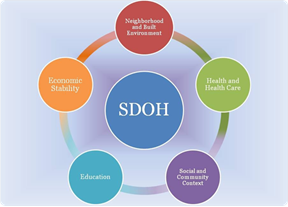
Case managers face social drivers that may affect how people interact with healthcare systems. See the illustration below that depicts the five SDoH domains. The SDoH elements are as varied as the people who live with them. Many case management assessments have embedded SDoH questions to screen for actual or potential concerns and barriers. These non-clinical factors can have a larger influence on readmission and self-care success.
Never assume that you know a culture, community, or neighborhood. Don’t let implicit bias interfere with providing quality care and services.
Wrap-Up
Case Managers are lifelong learners. An annual DEIB training is not enough. Seek clarification when you have questions. Ask the individual and family to explain their rituals, symbols, and beliefs, especially when they impact health care decisions or end-of-life care.
Maybe the dessert metaphor isn’t speaking to you, so I’ll leave you with these thoughts on working with people who are different than you:
- Be Curious
- Be Kind
- Be Humble
- Be the Difference
I’m happy to share my dessert recipes; contact me at millereli2@aol.com
References
CMSA (2025). Diversity, equity, inclusion, and belonging roadmap. Accessed July 17, 2026.
Copy of CMSA DEIB Roadmap - 2025
CMSA (2026). The Official diversity, equity, inclusion, and belonging toolkit. Accessed July 17, 2026.
CMSA (2022). Standards of practice for case management. Accessed July 17, 2026.
CMS17, 2026.A Standards of Case Management Practice | CMSA
CMSA (2025). DEIB Roadmap for workforce development pillar guidelines. Accessed July 17, 2026.
Copy of CMSA DEIB Roadmap - 2025
The Kitchen Pursuits (2026). The mystery of slump: A traditional New England dessert. Accessed July 17, 2026.
Unveiling the Mystery of Slump: A Traditional New England Dessert - TheKitchenPursuits
The Kitchen Pursuits (2026). Unraveling the origins of the term cobbler: A journey through history and cuisine.
Wisconsin Hospital Association (2026). Social drivers of health and health equity. Accessed July 17, 2026.
WHA - Social Drivers of Health & Health Equity
We're kicking off our Case Management Month celebration by getting back to what connects us with: RECONNECT, the week of October 4-10.
Reconnect with colleagues. With the case management community. With new ideas. And with the purpose behind the work you do every day.
It's the first chapter of RECONNECT. RECOGNIZE. REIGNITE. RISE., CMSA’s month-long celebration of case managers.
See what is happening throughout October: bit.ly/3PR89WG
Bio: Elaine is an experienced nurse, case manager and educator. She completed her undergraduate studies with the State University of New York at Platttsburgh, followed by her graduate work with the University of Virginia. Prior to entering case management practice, Elaine worked in diverse settings including oncology, nutrition support, home health, and traumatic brain injury rehabilitation. Case management offered Elaine opportunities to join transdisciplinary teams in cardiology, critical care, and ambulatory care. Since 2008, she has been associated with American Nurses Credentialing Commission, contributing to the Nursing Case Management (NCM) certification review products. She co-authored the 4th edition of the NCM Review and Resource Manual, with Peggy Leonard, and was the faculty for live workshops and webinar presentations. Elaine embraces her educator role, authoring manuscripts in CMSAToday, offering continuing education presentations, and coaching case managers to certification success. Elaine's current role, with US Navy, offers daily challenges, keeps her skills sharp and a smooth transition to retirement.